
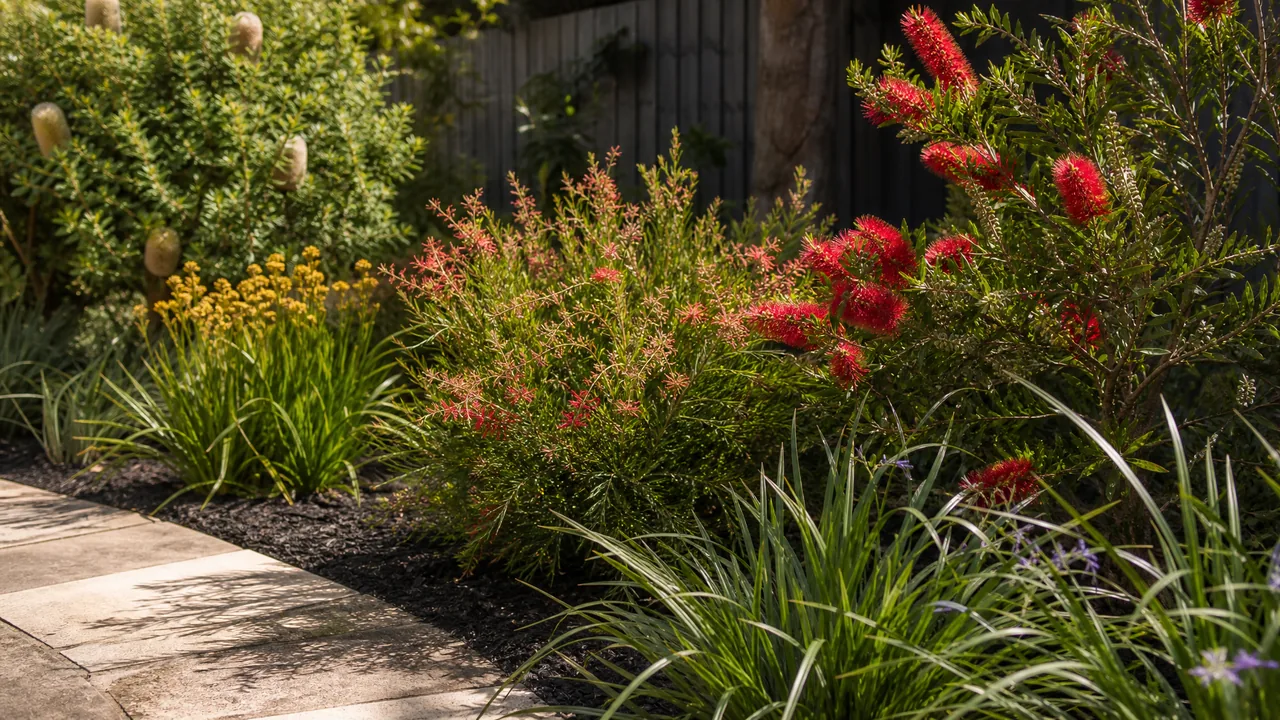
A native garden is the closest thing to a self-running garden you can plant on the Central Coast. Our warm, humid summers, mild winters and mix of sandy coastal and heavier clay soils suit a huge range of Australian natives - and once they're established they need far less water, feeding and fuss than a thirsty exotic garden. Choose the right plants for the spot and the garden largely looks after itself. Here are the hardiest, lowest-maintenance options and exactly how to keep them thriving.
Why native plants suit Central Coast gardens
- Climate-matched: locally-suited natives are built for Coast humidity, heat and the occasional cold snap, so they don't sulk the way many exotics do.
- Water-wise: once established, most need only a deep soak in extended dry spells - a big saving in summer and through water restrictions.
- Soil-tolerant: there are natives for sandy beachside soil and for the heavier clay further inland.
- Coastal-hardy: many shrug off salt spray and wind, which matters from the Peninsula to Terrigal and the beaches.
- Low-feed: they evolved in lean Australian soils, so they want little fertiliser - and the wrong fertiliser can actually harm them (more below).
- Habitat: nectar-rich flowers bring in honeyeaters, lorikeets and native bees year-round.
The best low-maintenance native plants for the Central Coast
| Plant | Type | Mature size | Why it's easy |
|---|---|---|---|
| Lomandra (e.g. ‘Tanika’) | Strappy grass | 0.4-1 m | Almost indestructible - sun or shade, wet or dry; great for mass planting and borders |
| Dianella (flax lily) | Strappy grass | 0.4-1 m | Shade-tolerant, spreads to fill gaps, blue berries; very hardy |
| Westringia (coastal rosemary) | Compact shrub | 0.5-1.5 m | Salt & wind tolerant; clips into neat low hedges |
| Grevillea (e.g. ‘Robyn Gordon’) | Flowering shrub | 1-2 m | Long-flowering, bird-attracting, drought-tolerant once set |
| Bottlebrush (callistemon) | Shrub / small tree | 1-4 m | Tough as nails; copes with wet and dry; brilliant for screening |
| Kangaroo paw (anigozanthos) | Strappy perennial | 0.5-1.5 m | Sun-loving feature colour; just cut back spent flower stems |
| Correa (native fuchsia) | Small shrub | 0.5-1.5 m | Handles shade and frost; flowers through the cooler months |
| Dwarf banksia (e.g. ‘Birthday Candles’) | Compact shrub | 0.5-1.5 m | Coastal-hardy, drought-tolerant, big bird drawcard (low-phosphorus only) |
| Hardenbergia (native sarsaparilla) | Climber | Climbs 2-3 m | Easy cover for fences and screens; purple winter flowers |
Best natives for coastal and salt-exposed gardens
Beachside and Peninsula gardens - think Umina, Ettalong, Terrigal and Avoca - cop salt and wind that burns soft exotics. These natives take it in their stride:
- Westringia (coastal rosemary) - the classic salt-tolerant hedge.
- Coastal banksia and tuckeroo - hardy screening trees for exposed blocks.
- Correa alba and lomandra - tough understorey and mass planting.
- Pigface (carpobrotus) - a spreading groundcover that loves sandy, salty positions.
What about shade, clay or dry spots?
- Shade: dianella, correa, native violet (a soft groundcover) and lilly pilly for a screening hedge.
- Heavy or wet clay: bottlebrush, melaleuca and lomandra cope where others rot.
- Hot, dry, sandy: grevillea, banksia, kangaroo paw and westringia thrive on neglect.
How do I care for native plants?
The whole point is low maintenance, so the routine is short:
- Mulch well. A 5-7 cm layer of organic mulch (kept off the stems) suppresses weeds, holds moisture and feeds the soil as it breaks down. This is the single biggest labour-saver.
- Feed lightly - and use the right food. Many natives, especially the Proteaceae family (grevillea, banksia, hakea, waratah), are sensitive to phosphorus and can be harmed or killed by standard high-phosphorus fertilisers. Use a low-phosphorus, native-specific fertiliser, applied lightly in spring or after flowering.
- Water to establish, then ease off. Keep the root zone damp for the first 8-12 weeks and through the first summer; after that, most local natives only need a deep soak in a long dry spell.
- Tip-prune after flowering. A light cut keeps shrubs dense and bushy and encourages the next flush of flowers - many natives love a trim.
- Right plant, right place. Match each plant to the sun, shade and drainage of the spot and you remove most of the work before you start.
When should I plant natives on the Central Coast?
Autumn is the best time to plant on the Coast - the soil is still warm, the air is cooler and winter rain helps the roots establish before the next summer. Spring is the next-best window. Try to avoid planting in the heat of mid-summer, when new plants dry out fast and need constant watering to survive.
Common native-garden mistakes to avoid
- High-phosphorus fertiliser on phosphorus-sensitive natives - the fastest way to kill a grevillea or banksia.
- Overwatering established plants - most natives prefer it on the dry side and rot in constantly wet soil.
- Wrong plant for the position - a sun-lover planted in deep shade will always struggle.
- Skipping mulch - bare soil means more weeds, more watering and more work.
Want a native garden planned and cared for?
A native garden is low-maintenance, not no-maintenance - it still wants the right mulch, a light seasonal feed, a tidy prune and the weeds kept down. If you'd rather enjoy it than manage it, we can set up garden maintenance on the Central Coast tuned to native beds, and keep the lawn healthy alongside it with a seasonal lawn care program - so your easy-care garden stays that way.